Academia vs Industry
Almost two years ago, after I finished my PhD program, I decided to take a break. A recovery from a burn out break. It was wonderful and much-needed and I would not have it any other way. However, towards the end of that soul-enriching break, the anxiety about my future job prospects started to creep in. I knew that I did not want to stay in academia. I did not envision myself as a full-time tenure-track professor with a research laboratory, associated with a university or an institution. Instead, I was always interested in science communication. Even though I did not want to be in academia, I still wanted to be in an academia-adjacent role.
Anyone who has gone through the post-PhD job-hunting phase knows that the whole process of writing resumes and cover letters, applying to positions and waiting for a positive response can be nerve-wracking, demotivating and definitely, emotionally exhausting. Additionally, as an international student with work/study permits that have a definite deadline and the always existing fear of deportation as the immigration policies continuously change, the job-hunting process becomes even more challenging. To optimize my chances of landing a job, hopefully in the broad field of geology, I applied EVERYWHERE. Science communication roles, editorial roles, lectureship positions and of course, the industry.
Applying to industry roles and bridging that gap between my academic background in earthquake geology to the industry of mineral exploration and mineral production was a tough sell at first. Combing through the jargon of industry, unlearning the jargon of academia, and deviating slightly from my earthquake background and pivoting towards a more fundamental geology domain of structural geology allowed me to make this transition a bit smoother. However, due to my lack of any industry experience, I was exclusively looking at entry-level positions which would allow me to learn the ropes as I find my way through this sector.
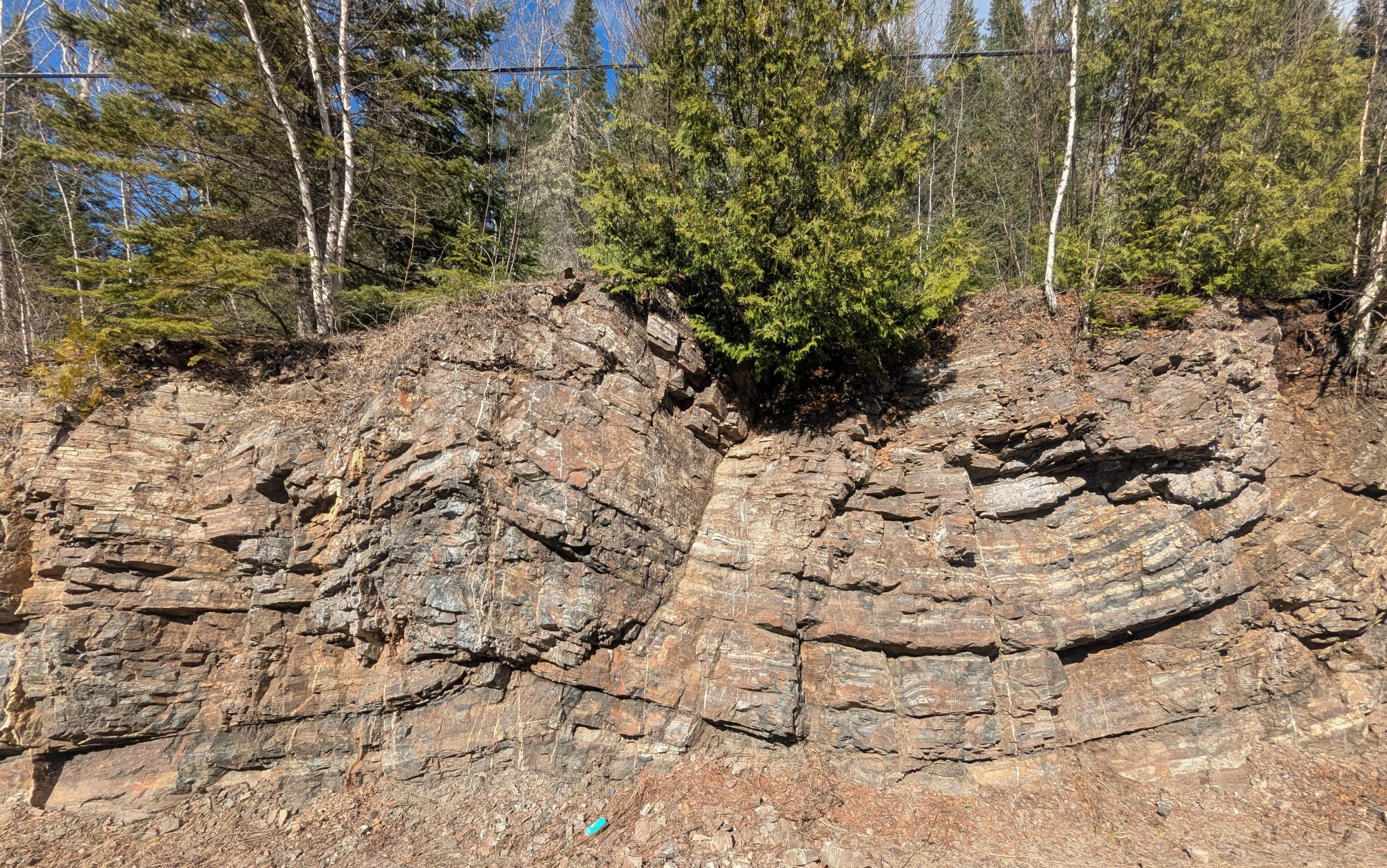 A cute little folded rock sequence.
Fast forward through months of applications, rejections after rejections and one international move, I finally landed a job as a core-logging geologist with a consulting company with the opportunity to work at a structurally-controlled mineral deposit. After working in this role over the last year, here is what I learned about the difference between being in academia versus working in the industry. It is nothing ground-breaking and I am definitely not the only one who has made this transition. However, these are my reflections and musings about this journey and things I wish I had known before I embarked on it. To anyone out there who is thinking about taking that leap and switching up their career paths, I hope this helps you out.
-
Timelines: Although academia has its own timelines, such as conference and grant deadlines and paper submission deadlines, the application of your research idea takes a while to become mainstream knowledge. Even timelines for peer-reviewing can be months-long. In industry, results are much faster with expedited assay results, real-time model updates and future mine development plans put in motion within 2-3 months of when the drill/rock was first documented.
-
Working in teams: While academia has much space for collaborations, every researcher is responsible for their own project. Hence the term “principal investigator”. My thesis, experiments, analysis, interpretation, and final presentation were my responsibility that directly affected my timeline. Whereas in industry, everyone is part of a team, for example, exploration, production, mill, drilling, etc. Each team member has an assigned role and responsibility and they are answerable to that defined role. While some roles require wearing many hats, just like in academia, the baseline is for everyone to work under a well-defined set of roles and be directly responsible for that.
-
Operation scale: As a fieldwork researcher, we had to take charge of fieldwork logistics and do multiple scales of projects while holding other positions such as teaching assistantships. While that can get challenging for an individual due to multiple timelines and deadlines, operations at an active mine works at a different level. Multiple rotation schedules, multiple teams with very different workflows, maintaining health and safety standards, reporting results while managing all the personnel on a remote site with well-provided amenities is no small-feat. On top of that, every team’s output directly forms the input for the next downstream team. It is a giant clockwork machine that needs to run like one for the mine to keep producing and delivering on-time.
-
Independence and control on one’s schedule: Since a mine runs on a specific schedule with multiple moving parts, it becomes a requirement to have everyone deliver on their daily goals and team targets. This requires standardization over the workflow and following procedures to the tee. This is different from academia since as a researcher, you have some amount of independence on how you formulate your research topic over the years and come up with your own workflow, how you choose to establish your own personal routine and even decide on your own working hours. Depending on your own personal preference, it does require some adjustments and getting used to it over time.
-
Reinventing the wheel: When we start our thesis/research project, it requires us to start from scratch and create workflows and documentation along the way. Even for non-research related aspects, every researcher has to invent the wheel at some point, when it comes to creating up-to-date onboarding policy for each laboratory, laboratory rules, managing individual project budgets, filing expense reports, etc. At any time, a researcher is also an administrator, finance person and logistics coordinator all together. While having such multiple roles makes you proficient in everything, it can get exhausting at times and takes significant time away from active research. This is different in the industry since there is a person for each role. Therefore, as a geologist, my role is to document and describe the geology whereas there is a camp administrator who is responsible for making sure my camp accommodations are taken care of when I arrive on-site.
-
Experimentation: Academia is based around experimentation. We experiment, document, experiment again. We are trained to treat results, negative or positive, with equal importance which requires us to go down some rabbit holes to see an idea through. This process can be equal parts time-consuming and revealing depending on where the rabbit hole leads you to. Creating multiple experiments and chasing down some rabbit holes is difficult to do in a mine setting since everything is on a timeline with people counting on you. However, depending on the team’s goals and operation phase, there can be some opportunities for deep ideation and experimentation. One unifying factor that applies to both academia and industry is the ability to creatively problem-solve and both sectors will provide you with ample opportunities to do so.
-
Fieldwork Scope: Just as academia can take you to wild and awe-inspiring fieldwork destinations across the globe, most mining operations also operate out of remote locations, sometimes deep in the wilderness. No matter which path you choose, you get to work in some of the remotest and wildest places on the planet. Getting the opportunity to do fieldwork in places where very few humans get to go is truly humbling at times. You get to be the little blue dot in the middle of nowhere on Google Maps for weeks on end and that is something that makes geology (as a whole discipline) very special.
-
New technology: A perk of being in academia is playing with the latest prototypes of machines and being involved in the initial stages of product development. While a lot of technology development that happens in academia requires industry inputs, usually researchers are the first in their laboratory to test something out before launching the semi-polished product in the market. However, some industry partners seek out active and close collaboration with academic institutions to develop a niche product that has industry-specific application. In such cases, it forms the basis for knowledge mobilization between industry and academia and for future collaborations where new technology is developed with sound research backing and well thought out user interfaces and applications.
After experiencing both sectors, I don’t think I can pass judgement on which is better since my needs and outlook has also changed over the years. No matter which sector is the “correct” one for you, each will have its own learning curve, pros and cons.
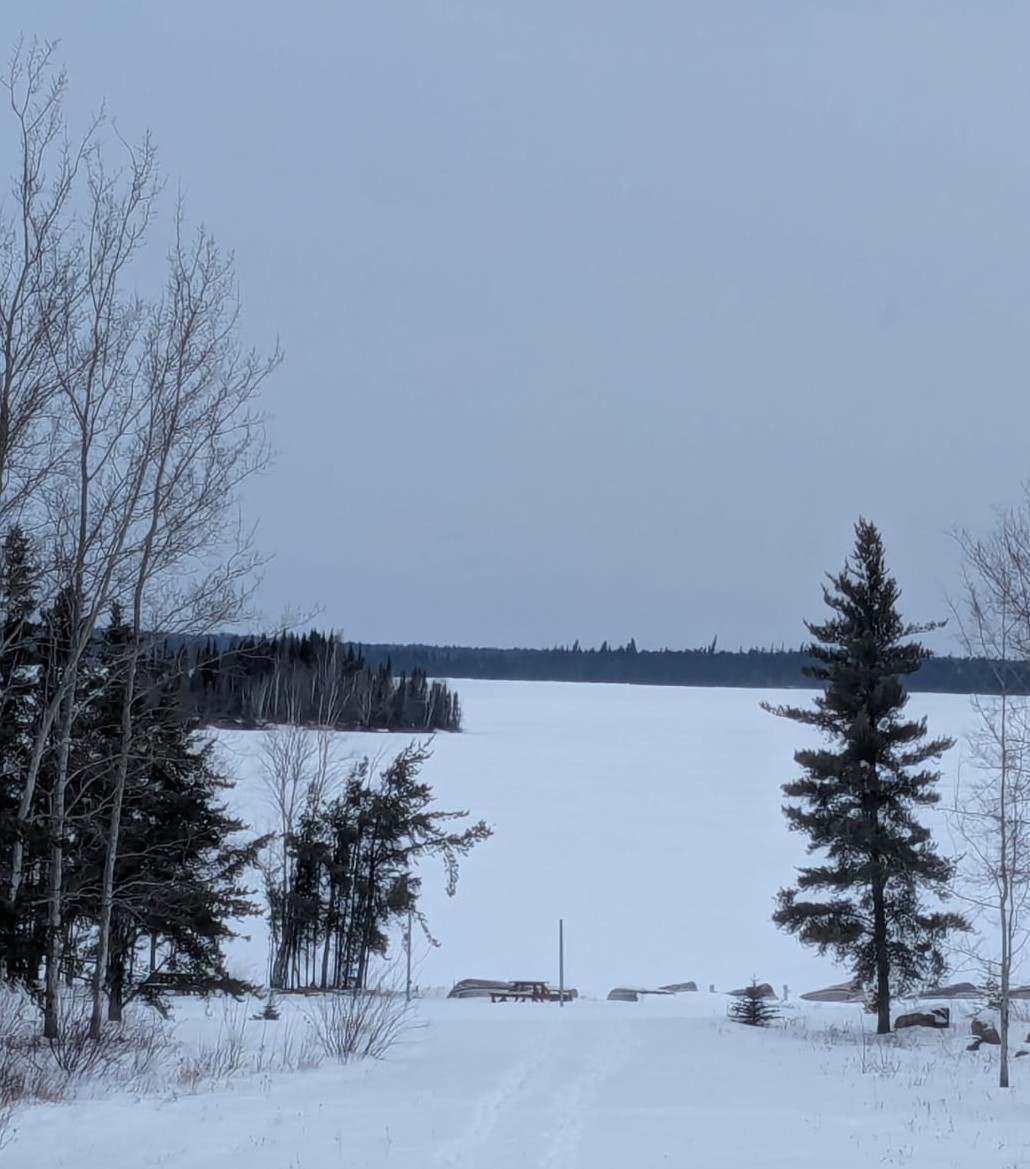 Endless snow, a reality of living and working in Canada.
Some of the things that I observed in academia that I did not enjoy particularly were the low-paying stipends for graduate students, an inherent power dynamic that exists in that hierarchy, having a hard time to switch off your brain and finding a healthy work-life balance and huge amounts of stress for the success of your research project without adequate support. During my doctoral program, I was one of the fortunate few who had a supervisor who valued her student’s personal time and created an environment of healthy collaboration and participation. She also allowed me to go after all my passion projects and provided active support while we worked on righting some of the wrongs of academia, such as increasing representation in laboratories, demanding for higher grad student pay and ensuring safe fieldwork practices without a power dynamic imbalance. While I am super grateful for all the friends I made in academia, all the cool projects I got to work and all the stories I got to share as a side-hustling science communicator, I am excited for what this transition will bring for me in the years to come. Who knows, I might still try to nerd out over something completely different, like lichen-rock relationships or what’s up with slime moulds or how geology influences wine terroirs.
Regardless, I am sure being in the industry also has its challenges which I have come across or will come across in due course of time. It will definitely be a journey since I would also need to change my research-backed, thoroughly investigated, critically thought out academic hat for a more operations-based, time-efficient, practical-focused industry hard hat. Until then and no matter where I eventually end up, I will forever be excited to look at deformed and squished up rocks and that, I guess, is the point of this discipline after all!